
The Lived Experiences of Former Students and Community Stakeholders on Recruitment Pathways in Salugpongan Lumad Schools: An Inquiry
DOI:
https://doi.org/10.59120/drj.v17i3.610Keywords:
Alternative schools, CPP–NPA recruitment, IP education, Lumad, SalugponganAbstract
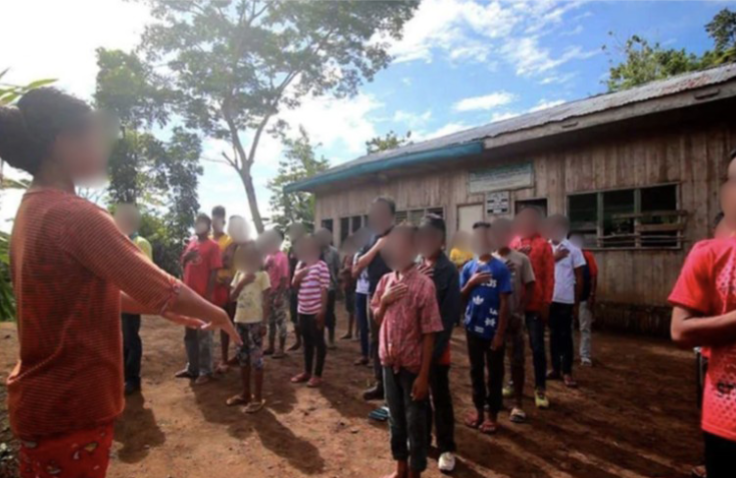
While alternative school systems are designed to provide education in remote areas, they can be systematically exploited by non-state actors as institutional pipelines for insurgent recruitment. Understanding how these educational networks manipulate geographical isolation helps identify the critical interventions needed to safeguard vulnerable indigenous youth. However, empirical research tracing the precise, step-by-step socialization and tactical training mechanics within these specific alternative school systems is limited. The main objective of this qualitative phenomenological study was to analyze how the Salugpongan Lumad schools in Talaingod, Davao del Norte, that were operational until 2019, were structurally utilized to transition indigenous youth from classrooms into active combat roles by the CPP-NPA-NDF. Data were generated from semi-structured interviews with ten key participants, including former students, former rebels, parents, and tribal Datus, and analyzed through Content Analysis. The results revealed that the recruitment pipeline relied on three distinct phases. First, a complete lack of government services forced families to rely entirely on the schools for free basic goods. Second, untrained volunteer teachers replaced standard subjects with subversive lessons and used peer pressure to drive radicalization. Third, older students received intense physical and weapons training in insurgent camps. This was finished with a three-month 'Revolutionary Integration' phase that made it mentally impossible for them to leave. The findings suggest that the government must urgently continue to broaden the construction of permanent public schools in isolated ancestral domains.
Downloads
References
Abacioglu, C. S., Epskamp, S., Fischer, A. H., & Volman, M. (2023). Effects of multicultural education on student engagement in low-and high-concentration classrooms: the mediating role of student relationships. Learning environments research, 26(3), 951-975. https://doi.org/10.1007/s10984-023-09462-0
Adeniran, A. O., & Tayo-Ladega, O. (2024). Critical analysis of phenomenological research design in a qualitative research method. Management Analytics and Social Insights, 1(2), 186–196. https://doi.org/10.22105/AD338T15
Ainscow, M. (2020). Promoting inclusion and equity in education: Lessons from international experiences. Nordic Journal of Studies in Educational Policy, 6(1), 7–16. https://doi.org/10.1080/20020317.2020.1729587
Downloads
Published
Issue
Section

License
Copyright (c) 2026 Bismark D. Gumela

This work is licensed under a Creative Commons Attribution-NonCommercial 4.0 International License.
DRJ is an open-access journal and the article's license is CC-BY-NC. This license allows others to distribute, remix, tweak, and build on the author's work, as long as they give credit to the original work. Authors retain the copyright and grant the journal/publisher non-exclusive publishing rights with the work simultaneously licensed under a https://creativecommons.org/licenses/by-nc/4.0/.