
Artificial Intelligence (AI) Utilization as a Mediator Between Students’ Study Attitude and Mathematics Achievement
DOI:
https://doi.org/10.59120/drj.v16i4.480Keywords:
AI utilization, higher education, mathematics achievement, students’ study attitudeAbstract
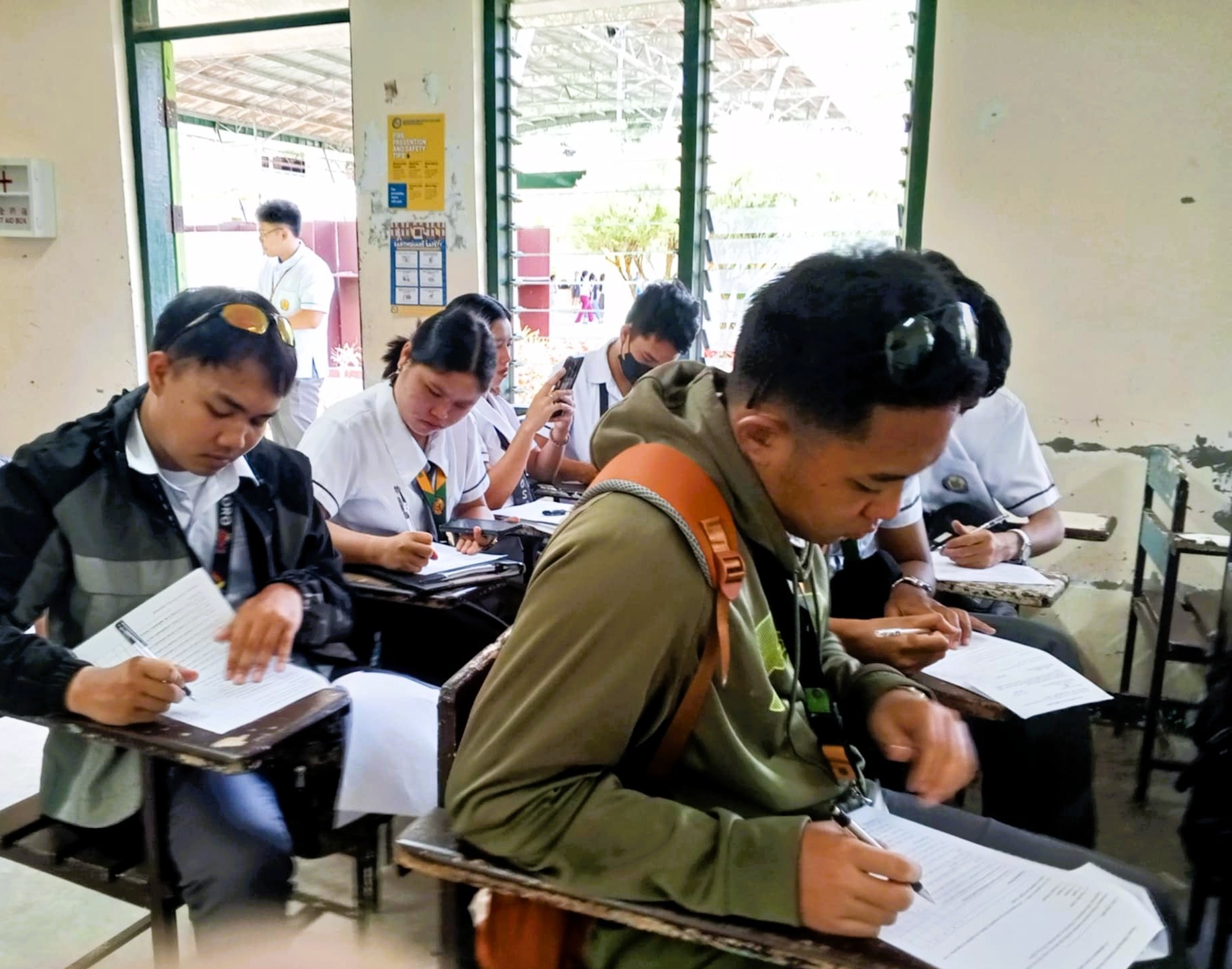
Artificial Intelligence (AI) integration in education has sparked interest in its effect on student learning. This study examined AI utilization as a mediator in the relationship between students’ study attitude and mathematics achievement, involving 323 BSED Mathematics students across four campuses of Davao de Oro State College, of whom 195 were identified as AI users. A quantitative, descriptive-correlational design was employed, with data collected through stratified random sampling. An adapted questionnaire measured study attitude (17 items) and AI utilization (25 items), while mathematics grades from the first semester of the academic year 2024–2025 served as indicators of academic performance. Statistical analyses included mean, standard deviation, Pearson correlation, and Sobel’s Test. Findings revealed that students generally demonstrated high levels of study attitude, whereas AI utilization was moderate. Mathematics achievement was classified as very satisfactory. Despite these positive indicators, the relationship between AI utilization and mathematics achievement was weak and non-significant, and mediation analysis showed no significant mediating effect of AI utilization. In conclusion, the study indicates that although students exhibited strong study attitudes and satisfactory mathematics performance, AI utilization did not significantly influence achievement or mediate the relationship between study attitude and performance. This suggests that students’ learning attitudes remain more influential than AI use, while AI tools function primarily as supplementary support. Strengthening students’ study habits and attitudes should remain a priority in enhancing learning outcomes. Further research is recommended to determine the conditions under which AI may more effectively contribute to academic performance and inform broader educational strategies.
Downloads
References
Abulela, M. A. A., & Harwell, M. M. (2020). Data Analysis: Strengthening Inferences in Quantitative Education Studies Conducted by Novice Researchers. Kuram Ve Uygulamada Egitim Bilimleri, 20(1), 59–78. https://doi.org/10.12738/JESTP.2020.1.005
Afidchao, D. T., Bigayan, J. J. C. C., Galindez, M. S. S. M., Jimenez, E. J. B., Macam, F. K. C., Orias, C. E. L., Balonquita, M. C., & Bernardino, R. M. (2023). Perceived effectiveness of Artificial Intelligence-Powered Calculators on the academic performance of senior high school STEM students in mathematics. Zenodo (CERN European Organization for Nuclear Research). https://doi.org/10.5281/zenodo.8104870
Alim, A., & Shukla, D. (2019). An Application Approach of Stratified Sampling in Analytic-Predictive Environments of Big Data. Social Science Research Network. https://doi.org/10.2139/SSRN.3356445
Amiruzzaman, M. (2020). Exploring Students’ Understanding of Statistical Mean. Preprints. https://doi.org/10.20944/preprints202004.0455.v1
Downloads
Published
Issue
Section

License
Copyright (c) 2025 Lysander E. Roquero, Rain Jhon U. Rollon, Gemar B. Magbutong

This work is licensed under a Creative Commons Attribution-NonCommercial 4.0 International License.
DRJ is an open-access journal and the article's license is CC-BY-NC. This license allows others to distribute, remix, tweak, and build on the author's work, as long as they give credit to the original work. Authors retain the copyright and grant the journal/publisher non-exclusive publishing rights with the work simultaneously licensed under a https://creativecommons.org/licenses/by-nc/4.0/.