
Conservation Challenges and Local Awareness of Rafflesia magnifica in Maragusan, Davao de Oro, Philippines
DOI:
https://doi.org/10.59120/drj.v16i4.475Keywords:
Biodiversity conservation, community engagement, ecological monitoring, endangered species, habitat protectionAbstract
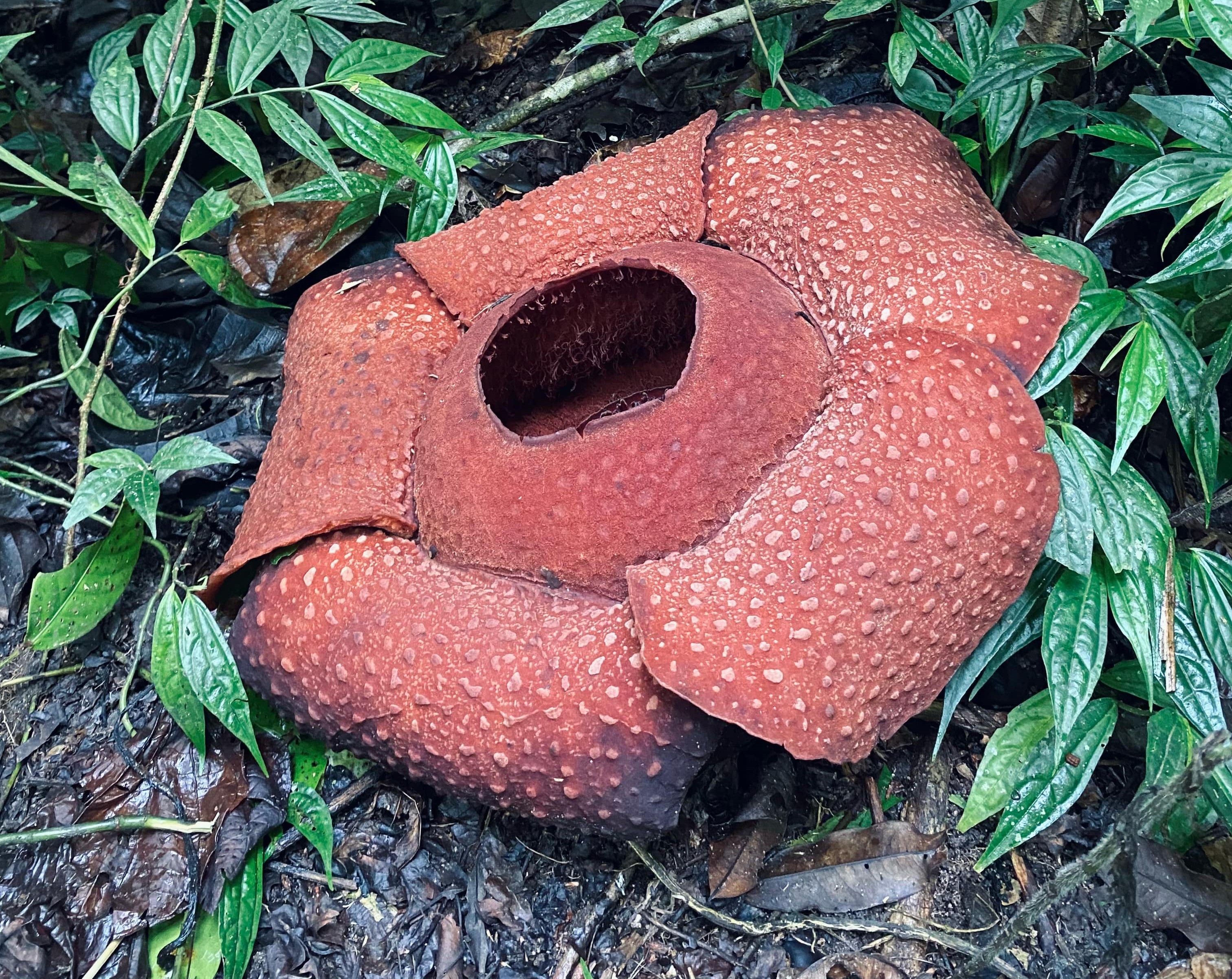
This study examines the conservation status of Rafflesia magnifica, an endangered species endemic to Maragusan, with a focus on its population, local awareness, and conservation practices. Data were collected through structured surveys and key informant interviews to assess the residents’ knowledge, attitudes, and practices on the conservation of R. magnifica in Barangays Mapawa and New Panay, which serve as key monitoring sites for the species. Population monitoring revealed a significant decline in R. magnifica. In Barangay Mapawa, the number of healthy buds dropped from 13 in 2022 to just two by May 2024. Successful blooms also decreased from five in 2022 to four in 2023, with four buds blooming in early 2024. In contrast, Barangay New Panay recorded no buds in 2023 and only one bloom bud in May 2024, highlighting a severe decline. The study also assessed local awareness of R. magnifica conservation. Knowledge was low (mean score: 1.65), while attitudes were moderate (mean score: 1.75), and practices were also low (mean score: 1.76). Despite these gaps, 93.3% of residents were aware of the species' existence, and most recognized its critically endangered status. However, 40% believed habitat protection did not affect blooming. The community expressed strong support for conservation, with over 90% backing protected area legislation and showing interest in conservation training. These findings emphasize the need for immediate education programs, community engagement, and a formal management plan to ensure the survival of R. magnifica in Maragusan.
Downloads
References
Altamira, M. B., and Koestoer, R. H. (2024). Public awareness on wildlife conservation: A systematic literature review. Environment Education and Conservation, 1(2), 1-11. https://doi.org/10.61511/educo.v1i2.2024.1652
Ardoin, N. M., Bowers, A. W., and Gaillard, E. (2020). Environmental education outcomes for conservation: A systematic review. Biological conservation, 241, 108224. https://doi.org/10.1016/j.biocon.2019.108224
Baloch, Q. B., Shah, S. N., Iqbal, N., Sheeraz, M., Asadullah, M., Mahar, S., and Khan, A. U. (2023). Impact of tourism development upon environmental sustainability: a suggested framework for sustainable ecotourism. Environmental Science and Pollution Research, 30(3), 5917-5930. https://doi.org/10.1007/s11356-022-22496-w
Barcelona, J. F., Pelser, P. B., Balete, D. S., and Co, L. L. (2009). Taxonomy, ecology, and conservation status of Philippine Rafflesia (Rafflesiaceae). Blumea-Biodiversity, Evolution and Biogeography of Plants, 54(1-2), 77-93. https://doi.org/10.3767/000651909X474122
Downloads
Published
Issue
Section

License
Copyright (c) 2025 Jasper T. Egpit, Jay Mark Bantayan, Ferdinand Bautista, Phoebe Nemenzo-Calica, Eleanor M. Vilela

This work is licensed under a Creative Commons Attribution-NonCommercial 4.0 International License.
DRJ is an open-access journal and the article's license is CC-BY-NC. This license allows others to distribute, remix, tweak, and build on the author's work, as long as they give credit to the original work. Authors retain the copyright and grant the journal/publisher non-exclusive publishing rights with the work simultaneously licensed under a https://creativecommons.org/licenses/by-nc/4.0/.